MyFooderPlan
The studio's own meal planner, on the App Store since 2018 and still shipping
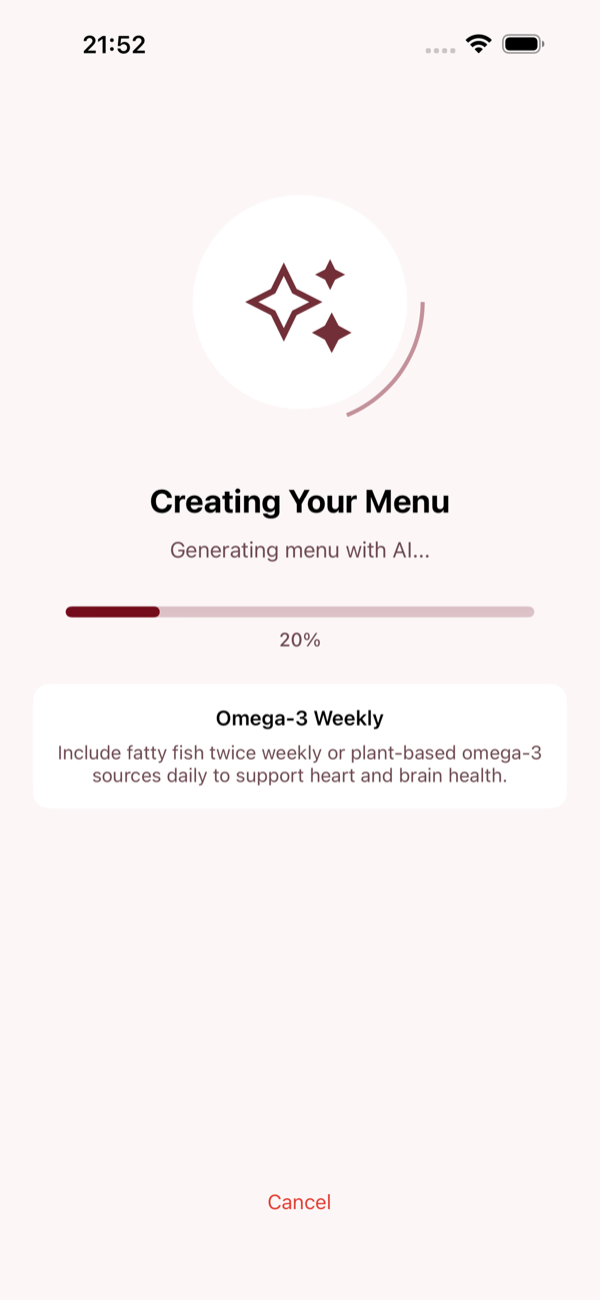
MyFooderPlan turns a vague intention — eat better this week — into a plan: an AI-generated menu, the grocery list behind it, and a PDF for the fridge door.
It is the studio's own product, so every decision was ours: the concept, the design, the iOS app, the backend that generates the menus, and each release since 2018.
- Our role
- Concept, design, iOS, backend
- Engagement period
- 2018–present
- Platforms
- iPhone, Apple Watch
Looking for something similar?
Tell us about your project
MyFooderPlan
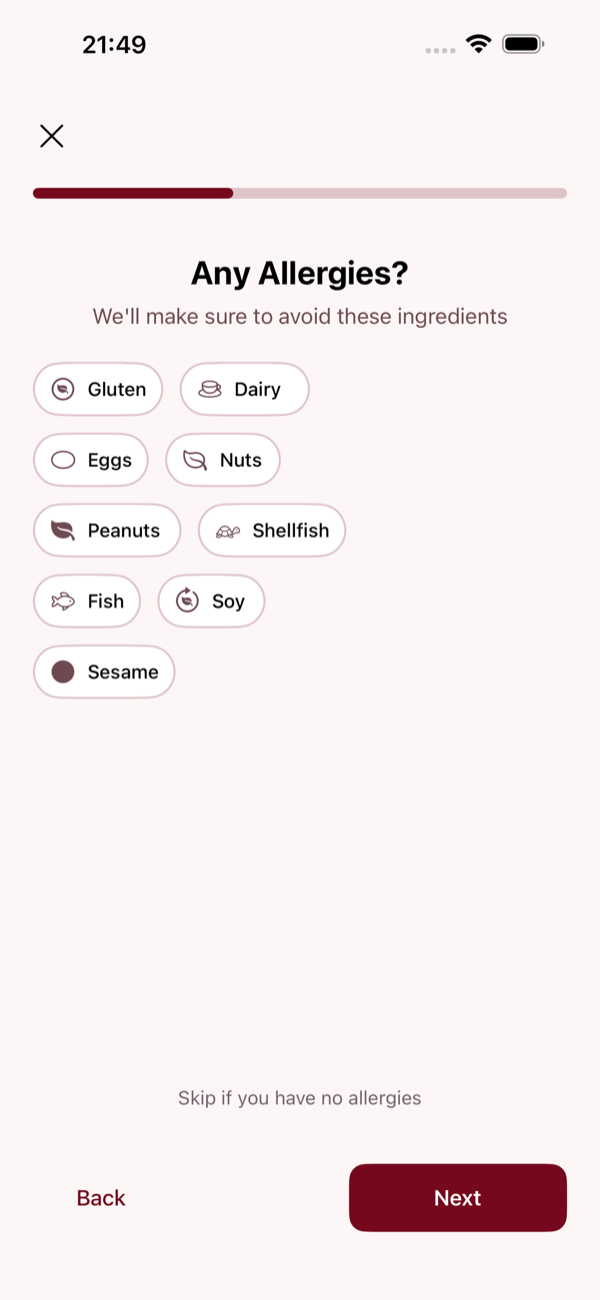
Meal planning fails at the boring part: deciding. MyFooderPlan asks a handful of questions once — diet, allergies, foods to avoid, calorie target, how much time there is to cook — and generates the whole menu around the answers, with the shopping already worked out.
What MyFooderPlan offers
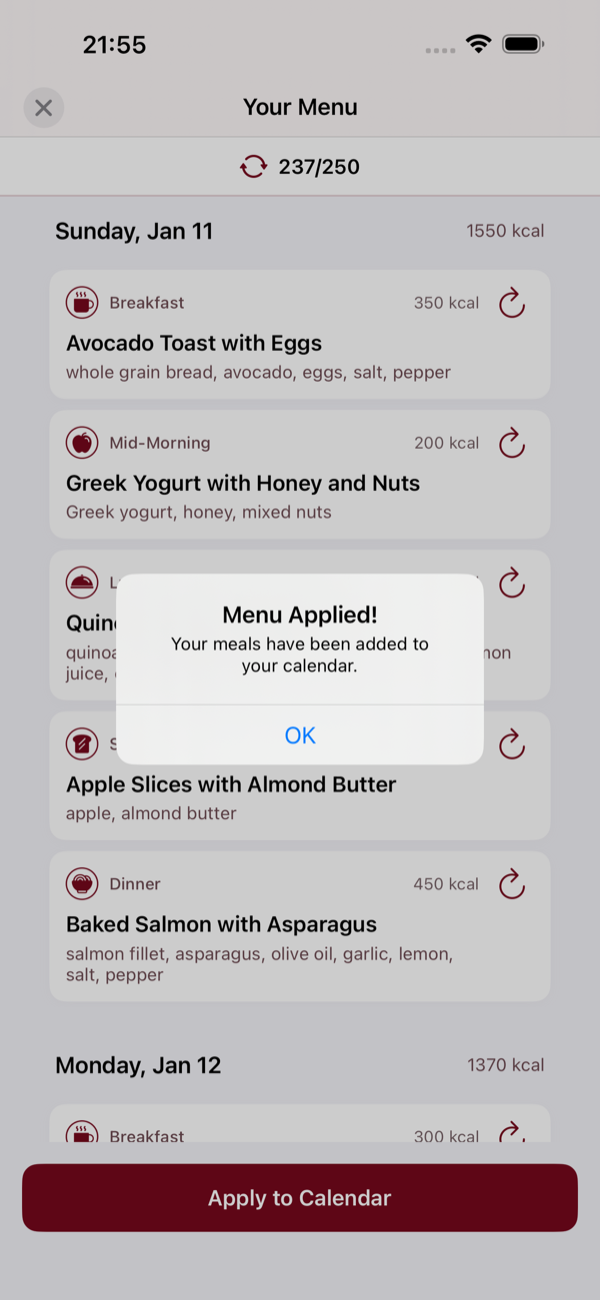
- AI menu generation: a plan built around the diet, allergies and calorie target of whoever asks for it
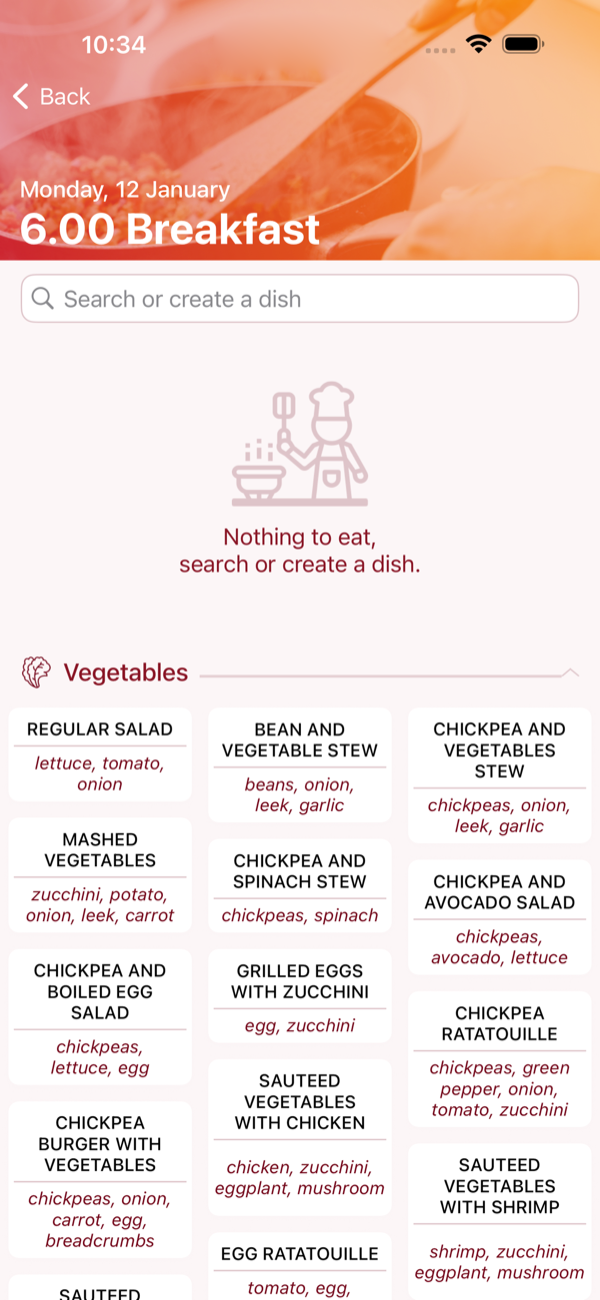
- Meal by meal control: swap any dish, search the catalogue or create a recipe of your own
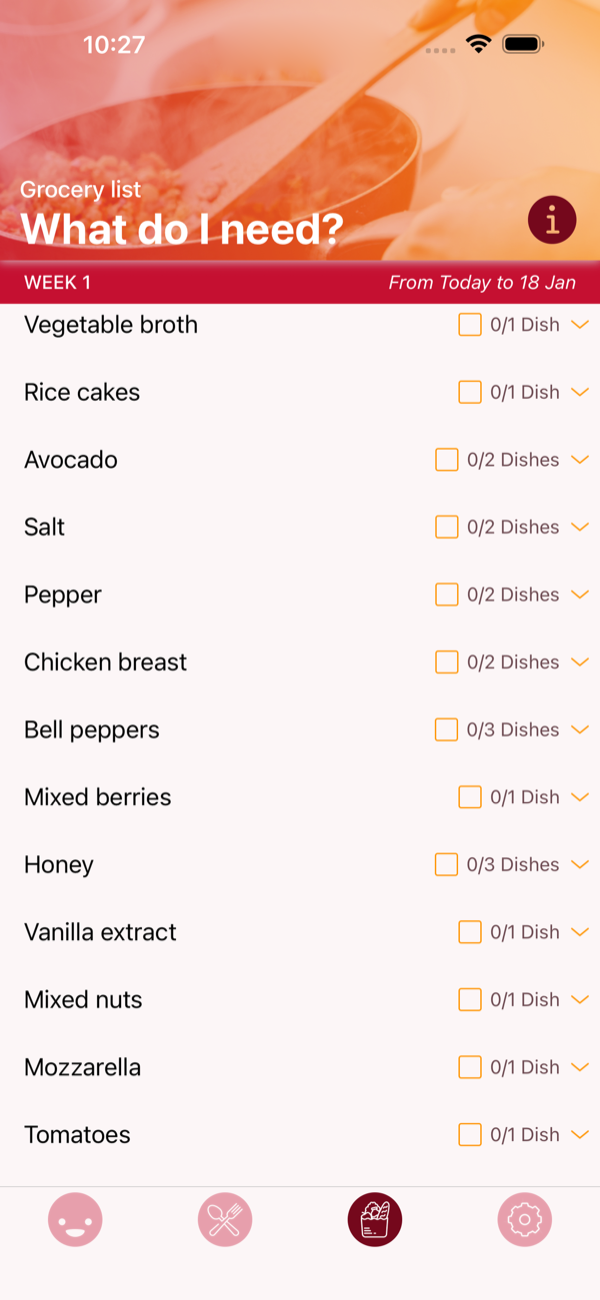
- Grocery list assembled from the menu, grouped and ticked off as the shopping goes in the basket
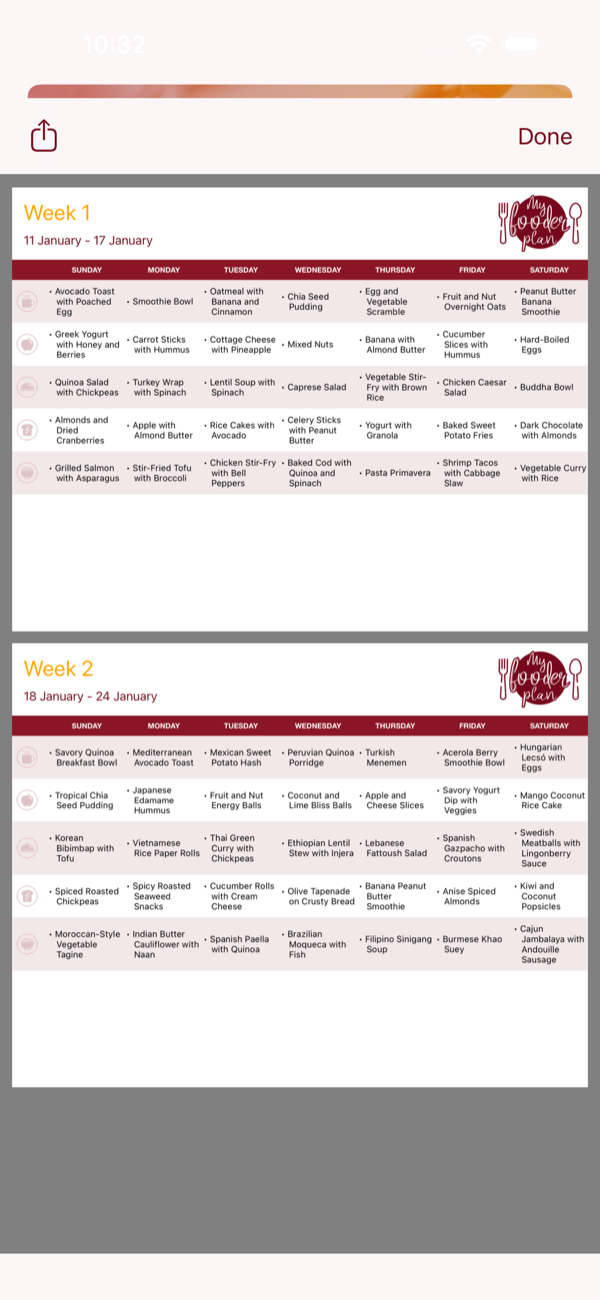
- Printable menu: the whole plan as a PDF, for the fridge door
- Reminders for tomorrow's meal and for the tupper that has to leave the freezer tonight
- Apple Watch and home-screen widgets, so the next meal is one glance away
- Weight tracking with Apple Health, in four languages: English, Spanish, French and Italian
Concept & decisions
The premise came first and has not moved since: real food, no calorie counting as a hobby. A professional nutritionist curated the dish catalogue the app ships with, paid for by the studio.
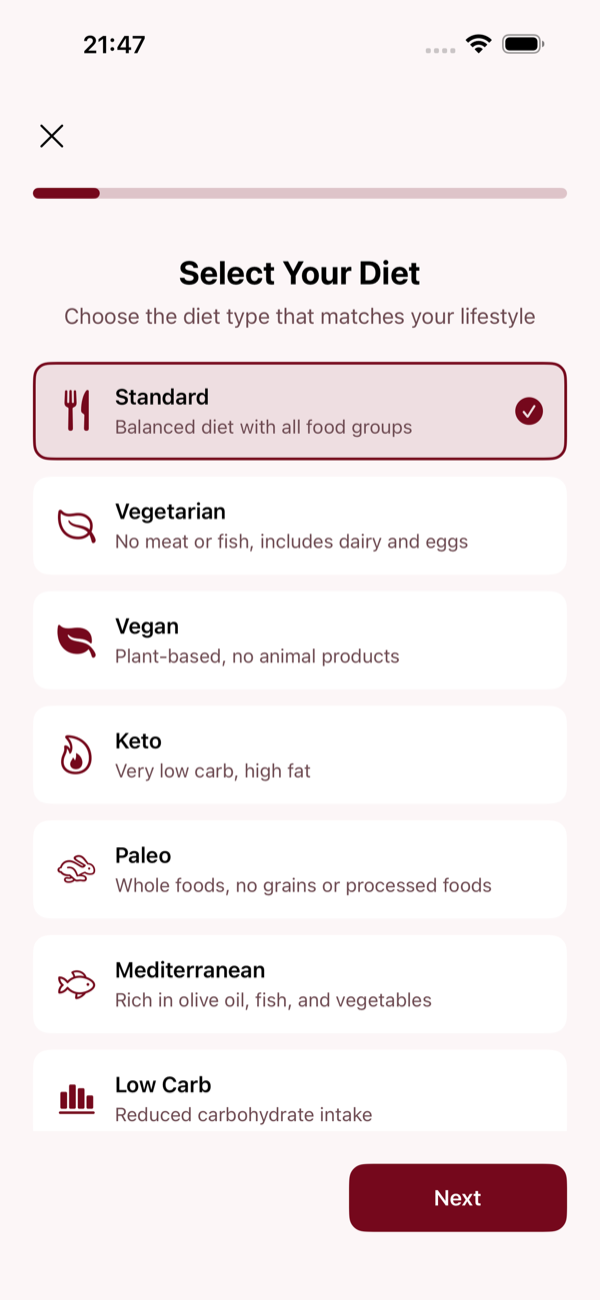
The hard question was how much to ask the user before being useful. The answer became the wizard: diet, allergies, foods to avoid, calories, meals per day and time to cook — asked once, in a handful of taps, and reused for every menu after that.
What the app deliberately does not do is decide for you. It proposes; anything on the plan can be swapped, edited or replaced with a recipe of your own.
Look & Feel
Version 2.0 rebuilt the interface around the food itself: warm reds over photography, one card per item, and the numbers stated without turning the screen into a spreadsheet.
Behind it, the app talks to a Supabase backend whose edge functions generate each menu and localize its content, so a plan reads in the same language as the app in all four of them.
Years after that first release, MyFooderPlan is also where the studio tries things first: it is the product where new architecture, new services and new App Store rules get proven before they reach a client's app.
Contact us
Shall we talk about your project? Email us at hello@irakai.com
We reply within two business days.